My review of the Shakespeare in the Park production of Twelfth Night is in today's New York Post.
Yes, Anne Hathaway is pretty good. Now we can all go back to discussing Michael Jackson.
Showing posts with label actresses. Show all posts
Showing posts with label actresses. Show all posts
Friday, June 26, 2009


Tuesday, April 28, 2009
Lust in the dust
Eugene O'Neill's Desire Under the Elms, St. James Theatre, New York Post, April 28, 2009.
Carla Gugino's back on stage—steamy!
Carla Gugino's back on stage—steamy!
Monday, April 20, 2009
Mary quite contrary
Friedrich Schiller's Mary Stuart at the Broadhurst, New York Post, April 20, 2009.
Janet McTeer + Harriet Walter = ka-BOOM! Plus rain on stage, which never gets old in my book. Well, almost never.
Janet McTeer + Harriet Walter = ka-BOOM! Plus rain on stage, which never gets old in my book. Well, almost never.
Wednesday, March 04, 2009
The Savannah Disputation
Evan Smith's The Savannah Disputation at Playwrights Horizons, New York Post, March 4.
Dana Ivey and Marylouise Burke sharing a stage? Go!
Dana Ivey and Marylouise Burke sharing a stage? Go!
Wednesday, February 25, 2009
The greatest living actress
 In these giddy post-Oscar days, it's important to keep things in perspective. Seeing Claude Autant-Lara's rare 1949 film Occupe-toi d'Amélie (left) a few days ago in Paris, for instance, I was reminded once again that Danielle Darrieux—who's turning 92 in May and was just the object of a 100-film retrospective at the Cinémathèque Française—is the greatest living actress.
American readers/viewers familiar with her most likely know Darrieux from her star turns in Max Ophüls's The Earrings of Madame de…, La Ronde and Le Plaisir, all from the 1950s, as well as from her appearance in Jacques Demy's Les Demoiselles de Rochefort, where she played Catherine Deneuve and Françoise Dorléac's mother. But she's so much more: She embodies both the very history of French cinema and a certain idea of the country itself—witty, elegant, alternately suggesting wounded melancholy and irrepressible grace. Few actors share her versatility. (Meryl Streep perhaps? Let's check back in 30 years.)
Oh, and Darrieux could sing, too. She started her career in a string of musicals in the 1930s and stayed faithful to the genre with Demy in the 1960s and all the way through François Ozon's 8 Women in 2002. She even made it to Broadway in 1970, when she replaced Katharine Hepburn in Coco.
In this clip from Norman Taurog's 1951 movie Rich, Young and Pretty, Darrieux performs "There's Danger in Your Eyes." (In the film she plays Jane Powell's mother despite being only 34; a few years later, she'd be Richard Burton's mom, even though he was only seven years older than she was.) And here she sings a setting of Aragon's "Il n'y a pas d'amour heureux" in 8 Femmes.
A quick note about Occupe-toi d'Amélie: The film, extremely rare for decades because the Feydeau estate thought it took liberties with the play, is an absolute jewel. Autant-Lara constantly plays off the porous border between stage and life by setting things up as a play within the film—and a play in which the spectators periodically interrupt the action, Purple Rose of Cairo–style. The pace is downright dizzying as well: This is how farce needs to be done, with speed but also absolute precision.
In this clip from Norman Taurog's 1951 movie Rich, Young and Pretty, Darrieux performs "There's Danger in Your Eyes." (In the film she plays Jane Powell's mother despite being only 34; a few years later, she'd be Richard Burton's mom, even though he was only seven years older than she was.) And here she sings a setting of Aragon's "Il n'y a pas d'amour heureux" in 8 Femmes.
A quick note about Occupe-toi d'Amélie: The film, extremely rare for decades because the Feydeau estate thought it took liberties with the play, is an absolute jewel. Autant-Lara constantly plays off the porous border between stage and life by setting things up as a play within the film—and a play in which the spectators periodically interrupt the action, Purple Rose of Cairo–style. The pace is downright dizzying as well: This is how farce needs to be done, with speed but also absolute precision.
Monday, January 19, 2009
Cut down those trees already
Just before intermission at The Cherry Orchard this weekend, I could see the Sheila's eyes glazing over in the semi-darkness. Yet it's not like the evening had been eventless so far: A man sitting in the middle of a row suddenly got up and left during a very quiet scene, creating quite a stir—but then he did not actually leave the theater, he just sat in an empty seat across the aisle from me. And stayed there after intermission. Then there was the gentleman holding a paper bag on his lap and rustling it absent-mindedly—and quite loudly—at regular intervals. Then there were the four people who arrived an hour late and were seated anyway, despite the fact that two of them were in the first row (which is very very close to the actors at BAM's Harvey Theater). Then there was the person who erupted in braying, quasi-hysterical laughter out of the blue.
As you can see, it was action-packed. And it wasn't too bad onstage either, so I told the Sheila she should stick with it because we were seeing a pretty good Chekhov.
I'm not the biggest Chekhov fan so it's a bit unfortunate that old Anton is hot on the New York stage right now. The Seagull flew off less than a month ago, Uncle Vanya is in previews at CSC, and Sam Mendes is having his way with Ranevskaya et al. I'm sure there's more on the horizon but honestly it depresses me a bit just to think about it.
As far as this Cherry Orchard goes, however, Mendes does a fairly decent job of balancing the drama and comedy that so bewilders directors. Aesthetically speaking it's a little too close to the Lincoln Center production of Coast of Utopia, especially when Mendes brings up a line of silently threatening representatives of the lower classes. (If only angry waiters and bank tellers could pop off at Barneys and Bouley to scare off hedge-fund managers and guilt-trip fashionistas.) But overall it's not too bad, and there's a couple of visually striking scenes, which is a couple more than in most mainstream NY productions, which seem directed by blind people.
But it's the acting that rocks. While I usually cannot stand Simon Russell Beale's hamming, he keeps it in check and delivers an affecting Lopakhin. My favorites were Sinead Cusack as Ranevskaya and Rebecca Hall as Varya. For the first time I didn't get terminally irritated and frustrated by Ranevskaya's refusal to sell her orchard: Yes, she's blithely clinging to a dying world, but Cusack made you understand why, and understanding helps keep the disdain at bay. As for Hall, her ramrod-straight posture barely disguised cracks of pain. And what a voice! Low, sexy—almost Elizabeth Marvel–ian at times. I cannot wait to see this gang in The Winter's Tale, which they will do in rep at BAM starting in February.
As you can see, it was action-packed. And it wasn't too bad onstage either, so I told the Sheila she should stick with it because we were seeing a pretty good Chekhov.
I'm not the biggest Chekhov fan so it's a bit unfortunate that old Anton is hot on the New York stage right now. The Seagull flew off less than a month ago, Uncle Vanya is in previews at CSC, and Sam Mendes is having his way with Ranevskaya et al. I'm sure there's more on the horizon but honestly it depresses me a bit just to think about it.
As far as this Cherry Orchard goes, however, Mendes does a fairly decent job of balancing the drama and comedy that so bewilders directors. Aesthetically speaking it's a little too close to the Lincoln Center production of Coast of Utopia, especially when Mendes brings up a line of silently threatening representatives of the lower classes. (If only angry waiters and bank tellers could pop off at Barneys and Bouley to scare off hedge-fund managers and guilt-trip fashionistas.) But overall it's not too bad, and there's a couple of visually striking scenes, which is a couple more than in most mainstream NY productions, which seem directed by blind people.
But it's the acting that rocks. While I usually cannot stand Simon Russell Beale's hamming, he keeps it in check and delivers an affecting Lopakhin. My favorites were Sinead Cusack as Ranevskaya and Rebecca Hall as Varya. For the first time I didn't get terminally irritated and frustrated by Ranevskaya's refusal to sell her orchard: Yes, she's blithely clinging to a dying world, but Cusack made you understand why, and understanding helps keep the disdain at bay. As for Hall, her ramrod-straight posture barely disguised cracks of pain. And what a voice! Low, sexy—almost Elizabeth Marvel–ian at times. I cannot wait to see this gang in The Winter's Tale, which they will do in rep at BAM starting in February.
Sunday, January 11, 2009
Starry sky over New York
Over at Channel Thirteen's Sunday Arts blog, I wax poetic about the abundance of high-wattage stars about to descend on NYC stage this winter and spring. The real question is, Is it worth seeing Mary-Louise Parker as Hedda Gabler if the staging is the kind of blah we are used to getting from the Roundabout? And what the hell is up with the current obsession with all things Chekhovian? That gun will get used if I have to watch one more Cherry Orchard.
Sunday, December 14, 2008
Wild-cat watch
Poor Sheila: She's been hit by a nasty lung infection and this weekend had to miss a pair of shows starring some favorite stage dames—Shrek the Musical with Sutton Foster as Princess Fiona and Pal Joey with Stockard Channing as Vera Simpson.
I won't give my take on them until the Time Out New York reviews hit the stand, but here's one thing: How many critics will use the word "cougar" in their review of Pal Joey? Stockard is 64 and her love interest in the show is played by Matthew Risch, 27. (Risch replaced Christian Hoff, 40, in previews.) One of the reasons I love the theater is that it's a lot more hospitable to women, particularly older women, than film or television, and you frequently see couples in which the woman is older than the man even if it's not in the script; in the case of Pal Joey, however, the age difference is an integral part of the story.
I was lucky to catch the Encores! production of the show in 1995. Vera Simpson was played by Patti LuPone (then 46) and Joey Evans was played by Peter Gallagher (then 39). Clearly the dynamic between Joey and Mrs. Simpson was very different from the one in the current revival—partly because the age gap was lesser, but because of specific acting choices as well. For now I'll just say that the new take on the relationship feels less daring than the 1995 one to me.
I won't give my take on them until the Time Out New York reviews hit the stand, but here's one thing: How many critics will use the word "cougar" in their review of Pal Joey? Stockard is 64 and her love interest in the show is played by Matthew Risch, 27. (Risch replaced Christian Hoff, 40, in previews.) One of the reasons I love the theater is that it's a lot more hospitable to women, particularly older women, than film or television, and you frequently see couples in which the woman is older than the man even if it's not in the script; in the case of Pal Joey, however, the age difference is an integral part of the story.
I was lucky to catch the Encores! production of the show in 1995. Vera Simpson was played by Patti LuPone (then 46) and Joey Evans was played by Peter Gallagher (then 39). Clearly the dynamic between Joey and Mrs. Simpson was very different from the one in the current revival—partly because the age gap was lesser, but because of specific acting choices as well. For now I'll just say that the new take on the relationship feels less daring than the 1995 one to me.
Friday, December 05, 2008
Opening Night at BAM
There's only two performances left of Opening Night at the BAM Harvey, so get rolling: This is a must-see if you like smart theater.
I went because Ivo van Hove is one of my two or three favorite directors at this point, not because I'm a particularly big fan of the source material, John Cassavetes's 1977 movie of the same name. I'd rented it a couple of years ago when going through a Gena Rowlands phase and was bored out of my mind—quite an achievement because on paper the film is right up my alley, ie, it's about a theater actress and a struggling show. I'm starting to think Cassavetes's tic-laden oeuvre may be one of the most overrated in the history of film; he's certainly a director who's created a thousand monsters (his influence on the worst aspects of modern French cinema cannot be understated), though admittedly he can hardly be blamed for that.
Anyway, not having liked the movie, I quite enjoyed this Dutch-language stage version, particularly the ending, which I found incredibly affecting.
Van Hove's main conceptual device is the use of a live video feed, so you watch some of the action on a large screen. When there was a scene between two characters, for instance, you could watch it in HD closeup (and those shots were often formally superb) or you could watch the live actors on stage. Following the advice of my colleague Helen Shaw, I deliberately focused on the stage rather than the screen, though I have to admit it was hard not to lapse—clearly part of a taunting game Van Hove played with the audience. (References to the Wooster Group have been bandied around but they're off-base to me. Just because someone uses video on stage doesn't mean they can be compared to the Wooster Group; the means and intents are very different here.) Opening Night is so formally and conceptually rich that I don't have the time to go into details here; for what it's worth, I highly recommend experiencing it for yourself.
Other than Van Hove's command of the theatrical space, you need to go to BAM to see his troupe. As we know from his collaborations with our own Elizabeth Marvel, the man gets unbelievable performances out of his actors. He makes them go from zero to 60 in a single scene, and in a hybrid style that's halfway between naturalistic and stylized. Special mention to Elsie de Brauw in the Rowlands part. It's always incredibly exciting to discover a true stage animal, an actor with such a vibrant presence that your eyes are on her even when she's not doing or saying anything. Of course it's a discovery for us here since De Brauw is well known in the Netherlands. To think of all the extraordinary stage actors we never get to see in New York…
I went because Ivo van Hove is one of my two or three favorite directors at this point, not because I'm a particularly big fan of the source material, John Cassavetes's 1977 movie of the same name. I'd rented it a couple of years ago when going through a Gena Rowlands phase and was bored out of my mind—quite an achievement because on paper the film is right up my alley, ie, it's about a theater actress and a struggling show. I'm starting to think Cassavetes's tic-laden oeuvre may be one of the most overrated in the history of film; he's certainly a director who's created a thousand monsters (his influence on the worst aspects of modern French cinema cannot be understated), though admittedly he can hardly be blamed for that.
Anyway, not having liked the movie, I quite enjoyed this Dutch-language stage version, particularly the ending, which I found incredibly affecting.
Van Hove's main conceptual device is the use of a live video feed, so you watch some of the action on a large screen. When there was a scene between two characters, for instance, you could watch it in HD closeup (and those shots were often formally superb) or you could watch the live actors on stage. Following the advice of my colleague Helen Shaw, I deliberately focused on the stage rather than the screen, though I have to admit it was hard not to lapse—clearly part of a taunting game Van Hove played with the audience. (References to the Wooster Group have been bandied around but they're off-base to me. Just because someone uses video on stage doesn't mean they can be compared to the Wooster Group; the means and intents are very different here.) Opening Night is so formally and conceptually rich that I don't have the time to go into details here; for what it's worth, I highly recommend experiencing it for yourself.
Other than Van Hove's command of the theatrical space, you need to go to BAM to see his troupe. As we know from his collaborations with our own Elizabeth Marvel, the man gets unbelievable performances out of his actors. He makes them go from zero to 60 in a single scene, and in a hybrid style that's halfway between naturalistic and stylized. Special mention to Elsie de Brauw in the Rowlands part. It's always incredibly exciting to discover a true stage animal, an actor with such a vibrant presence that your eyes are on her even when she's not doing or saying anything. Of course it's a discovery for us here since De Brauw is well known in the Netherlands. To think of all the extraordinary stage actors we never get to see in New York…
Thursday, March 13, 2008
The fairest one of all
Like many people, I have a thorny, love-hate relationship with Disney. It's hard not to admire the craft that goes into many of the films while at the same time being repelled by their message and the image of the company as a whole. Having absurdly enjoyed the soundtrack to Enchanted (yes, that'd be the one that clogged the Oscars with three performances), I finally caught the movie on DVD. If only it could have ended after 45 minutes…
The premise is simple: a typical animated Disney princess falls in love with a prince after knowing him for about five seconds, and is dispatched to real-life Manhattan by his power-hungry stepmother; she leaves behind her meadow of singing animals and talking chipmunks to enter a city of precocious six-year-olds and Crackberry addicts. The best part is that the irrepressibly perky Giselle still acts in NYC as if she was living in animated la-la land. This is where the movie is really inspired, and I'm not sure it's entirely on purpose (whatever: I'll take it). You see, Giselle behaves as if she's clinically insane, and thanks to the comedic chops and natural charisma of Amy Adams, who plays her, the viewer is torn between feeling sorry for nutso Giselle and being totally charmed by her. In that part of Enchanted, you're watching a delusional woman act out her fantasies of a rose-colored world—like someone who's watched too many Disney movies and started believing their noxious subtext. She gets the local fauna to help her in a musical number, for instance, except of course it's rats and roaches and pigeons. Giselle is the most beautiful bag lady you've ever seen, spouting crackpot wisdom and surrounded by vermin. Needless to say, I loved that bit.
This being Disney 2008, Enchanted goes on to 1. indulge in a ridiculously over the top battle with Susan Sarandon as a giant dragon (shades of Sleeping Beauty's Maleficent of course, but boring as hell, like a cheesy outtake from Ghostbusters), 2. have Giselle save her new prince instead of vice versa and 3. have Giselle become a fashion designer, ’cause she's not a stay-at-home princess (and her helpers are animals, not Chinese people in sweatshops). Sigh.
P.S.: This is a musical in which Broadway pros like Idina Menzel and Tonya Pinkins (and Julie Andrews, who narrates) don't even get to sing!
The premise is simple: a typical animated Disney princess falls in love with a prince after knowing him for about five seconds, and is dispatched to real-life Manhattan by his power-hungry stepmother; she leaves behind her meadow of singing animals and talking chipmunks to enter a city of precocious six-year-olds and Crackberry addicts. The best part is that the irrepressibly perky Giselle still acts in NYC as if she was living in animated la-la land. This is where the movie is really inspired, and I'm not sure it's entirely on purpose (whatever: I'll take it). You see, Giselle behaves as if she's clinically insane, and thanks to the comedic chops and natural charisma of Amy Adams, who plays her, the viewer is torn between feeling sorry for nutso Giselle and being totally charmed by her. In that part of Enchanted, you're watching a delusional woman act out her fantasies of a rose-colored world—like someone who's watched too many Disney movies and started believing their noxious subtext. She gets the local fauna to help her in a musical number, for instance, except of course it's rats and roaches and pigeons. Giselle is the most beautiful bag lady you've ever seen, spouting crackpot wisdom and surrounded by vermin. Needless to say, I loved that bit.
This being Disney 2008, Enchanted goes on to 1. indulge in a ridiculously over the top battle with Susan Sarandon as a giant dragon (shades of Sleeping Beauty's Maleficent of course, but boring as hell, like a cheesy outtake from Ghostbusters), 2. have Giselle save her new prince instead of vice versa and 3. have Giselle become a fashion designer, ’cause she's not a stay-at-home princess (and her helpers are animals, not Chinese people in sweatshops). Sigh.
P.S.: This is a musical in which Broadway pros like Idina Menzel and Tonya Pinkins (and Julie Andrews, who narrates) don't even get to sing!
Monday, February 25, 2008
Lady Oscar
I had placed my chips on There Will Be Blood so I had a late collapse in our Oscar pool yesterday, after leading most of the evening. Things like getting both Best Actress and Best Supporting Actress did help, however. Weirdly Tilda Swinton seemed to be considered the dark horse and her win an upset, even though she's far from an unknown quantity and has been remarkable in pretty much everything she's ever done. And not that I wanted Juno to get anything (it is a trifle at best) but its getting Best Script particularly rankled me as the script is precisely the worst thing about the movie.
My favorite acting trend last night: Every single Oscar went to a non-American. Tilda Swinton is British; Daniel Day-Lewis is Irish; Javier Bardem is Spanish; Marion Cotillard is French. I'd like to say this is a seachange in prevailing acting styles, though it's probably just a coincidence. But what if it means a swing of the pendulum away from the Method and toward, you know, just making things up and pretending? (Though some may argue that DDL is pretty Method.)
Psyched to see Cotillard win, as I did like both her and La vie en rose, plus, you know, it's great to see a French actress up there 48 years after Simone Signoret, but at the same time I'm seriously bummed by this kneejerk rewarding of 1) the transformation of a beautiful actress into an ugly duckling through the magic of latex, 2) showy acting and 3) and biopic acting. Cotillard's performance, of course, covers all three bases. Again I enjoyed her a lot but it's frustrating to see understated or comedic performances always get the shaft. Over the past several years, way too many Oscars have gone to actors embodying real people (as far as one can say that Ray Charles, Idi Amin Dada, Truman Capote or Edith Piaf are "real" but let's not get too meta-meta here) and biopic-ing has become a surefire ticket. Pathetic.
Speaking of rocking chicks: Tina Fey came out for Hillary and pretty much nailed it on SNL's Weekend Update. Check out the video here. Her killer wrap-up: "bitch is the new black."
My favorite acting trend last night: Every single Oscar went to a non-American. Tilda Swinton is British; Daniel Day-Lewis is Irish; Javier Bardem is Spanish; Marion Cotillard is French. I'd like to say this is a seachange in prevailing acting styles, though it's probably just a coincidence. But what if it means a swing of the pendulum away from the Method and toward, you know, just making things up and pretending? (Though some may argue that DDL is pretty Method.)
Psyched to see Cotillard win, as I did like both her and La vie en rose, plus, you know, it's great to see a French actress up there 48 years after Simone Signoret, but at the same time I'm seriously bummed by this kneejerk rewarding of 1) the transformation of a beautiful actress into an ugly duckling through the magic of latex, 2) showy acting and 3) and biopic acting. Cotillard's performance, of course, covers all three bases. Again I enjoyed her a lot but it's frustrating to see understated or comedic performances always get the shaft. Over the past several years, way too many Oscars have gone to actors embodying real people (as far as one can say that Ray Charles, Idi Amin Dada, Truman Capote or Edith Piaf are "real" but let's not get too meta-meta here) and biopic-ing has become a surefire ticket. Pathetic.
Speaking of rocking chicks: Tina Fey came out for Hillary and pretty much nailed it on SNL's Weekend Update. Check out the video here. Her killer wrap-up: "bitch is the new black."
Thursday, January 10, 2008
Aussie imports
 There are two reasons, both Australian, I started watching Cashmere Mafia: Miranda Otto and Frances O'Connor. Otto (right) is best-known here for playing Éowyn in the Lord of the Rings franchise, but she was a lot more interesting in the small flicks she made in Oz, like The Last Days of Chez Nous, Love Serenade and The Well. O'Connor (left) was really appealing in Love and Other Catastrophes, an otherwise mediocre film.
As for the series itself, it begs the question: Is Darren Star shameless or washed-out or both? Centered around a quartet of women (each representing a different hair demographic; see photo), Cashmere Mafia is a total rip-off of his previous show, Sex and the City. Beyond the core idea of four female friends supporting each other through love and career troubles, the aesthetics are identical: The fifth main character is New York itself, with a profusion of brand-name locations (Cielo and Payard in yesterday's episode), and there's even time-lapse footage of clouds in the sky.
The main difference so far actually reflects an evolution in NYC itself: Samantha & Co. hardly had checkbook problems, but the new characters are seriously loaded. They are career women (they met in business school) who live gilded existences—in short, they're the type of people who can afford places in those "luxury condos" we see going up all over town, and they're the type of people who are sucking the life out of real New York by turning it into a playground for the rich. Not that the series is about that, of course, since it gears up to be your usual relationship porn—just like my other fave, The L Word. Still, the first couple of episodes have me semi-hooked because of the aforementioned actresses (particularly Otto, hottt in the ice-queen way that always works wonders with me).
Sunday, October 28, 2007
How to navigate through the stars
Within a 24-hour period this weekend I saw on stage Cate Blanchett, Peter Sarsgaard, Natalie Portman, Elaine Stritch, Ellen Burstyn, Anita Ekberg, Kevin Kline and Jennifer Garner. The latter two play the leads in Cyrano de Bergerac on Broadway. I'll get back to that one, though I'll let you ponder the fact, dear readers, that Garner's character, Roxane, is described as "bookish" in the text. Jennifer Garner bookish: three words I never thought I'd ever see in the same sentence.
As for all the others, they were in Francesco Vezzoli's one-night-only happening at the Guggenheim on Saturday night, part of Performa07. You could describe it as a star-studded reading of Pirandello's 1917 play Right You Are (If You Say You Are), but it was both more and less than that. Less, because as a reading, it plain sucked; more because as a concept, it was inspired.
I tagged along with Time Out New York's dynamic duo, dance editor Gia Kourlas and theater writer Adam Feldman; I felt decidedly gray next to their sartorial flair—she in some deconstructed, Westwood-like kite frock, he in his now-trademark swest (a sweater and a vest). After a late start, which caused tempers to amusingly flare on the enormous line, we finally made it inside the Gugg, only to realize the only spots left were rather high up on the ramp; the VIPs, of course, were on the floor, where mikes and lecterns were positioned facing inwards on a round platform. On one side, Anita Ekberg (!) sat on a couch made to look like oversize lips. We peered down to the action, feeling frustration mount (by then it was way past 11pm)—and it got worse as soon as the actors began speaking, as we realized with dismay that the sound was so shittily amplified that it echoed into sheer unintelligibility. Within five minutes, we decided to bail on one of the hottest tickets of the season.
But as we started walking away from the museum, a publicist caught up with us and explained that we'd be better in the theater, "and that's where Cate Blanchett is too." As it turned out, the proceedings upstairs were videotaped and projected in the Gugg's basement theater—and those upstairs had no way of knowing this was happening downstairs. La Blanchett indeed was there, sitting with her back to the audience in some leathery Galliano get-up and a black veil, a vision of ghostly goth chic.
The split-screen action in the basement offered unsparing video closeups of the actors on the main floor, some of them waffling between awkward and downright clueless (most notably Natalie Portman in mustachioed male drag by Prada and Abigail "Little Miss Sunshine" Breslin). Unsurprisingly, the ones who were best at actually acting out their lines were the old pros: Dianne Wiest, Ellen Burstyn, David Strathairn. But it was clear that the feed was the event's real point: not live but on video, and with a focus not on acting (this was not theater) but on sheer presence. This could not have been done with stage actors, it worked only with movie stars. And with someone from the category above star: that of icon—Ekberg, looking bored on her lips, drinking a glass of wine, observed and pitied by a cannibalistic, self-satisfied crowd who would not be caught with a copy of Star yet attended only because there were names in the cast.
Another good moment: when one of the screens suddenly switched to a shot of some of the VIPs, unaware they were being filmed. A beefy man in a suit looked as bored as Ekberg, fidgeting, looking at his shoes.
It all culminated at the very end when Blanchett finally got up from her subterranean perch, walked right by us like a b&w hologram on the runway of the damned, went all the way to the top of the museum then majestically proceeded down the ramp, filmed and photographed by paparazzi-like handlers, to join the other actors and deliver her handful of lines. Ta-da!
Soundtrack for the post-Vezzoli come-down: Róisín Murphy "Movie Star" (from Overpowered, 2007).
As for all the others, they were in Francesco Vezzoli's one-night-only happening at the Guggenheim on Saturday night, part of Performa07. You could describe it as a star-studded reading of Pirandello's 1917 play Right You Are (If You Say You Are), but it was both more and less than that. Less, because as a reading, it plain sucked; more because as a concept, it was inspired.
I tagged along with Time Out New York's dynamic duo, dance editor Gia Kourlas and theater writer Adam Feldman; I felt decidedly gray next to their sartorial flair—she in some deconstructed, Westwood-like kite frock, he in his now-trademark swest (a sweater and a vest). After a late start, which caused tempers to amusingly flare on the enormous line, we finally made it inside the Gugg, only to realize the only spots left were rather high up on the ramp; the VIPs, of course, were on the floor, where mikes and lecterns were positioned facing inwards on a round platform. On one side, Anita Ekberg (!) sat on a couch made to look like oversize lips. We peered down to the action, feeling frustration mount (by then it was way past 11pm)—and it got worse as soon as the actors began speaking, as we realized with dismay that the sound was so shittily amplified that it echoed into sheer unintelligibility. Within five minutes, we decided to bail on one of the hottest tickets of the season.
But as we started walking away from the museum, a publicist caught up with us and explained that we'd be better in the theater, "and that's where Cate Blanchett is too." As it turned out, the proceedings upstairs were videotaped and projected in the Gugg's basement theater—and those upstairs had no way of knowing this was happening downstairs. La Blanchett indeed was there, sitting with her back to the audience in some leathery Galliano get-up and a black veil, a vision of ghostly goth chic.
The split-screen action in the basement offered unsparing video closeups of the actors on the main floor, some of them waffling between awkward and downright clueless (most notably Natalie Portman in mustachioed male drag by Prada and Abigail "Little Miss Sunshine" Breslin). Unsurprisingly, the ones who were best at actually acting out their lines were the old pros: Dianne Wiest, Ellen Burstyn, David Strathairn. But it was clear that the feed was the event's real point: not live but on video, and with a focus not on acting (this was not theater) but on sheer presence. This could not have been done with stage actors, it worked only with movie stars. And with someone from the category above star: that of icon—Ekberg, looking bored on her lips, drinking a glass of wine, observed and pitied by a cannibalistic, self-satisfied crowd who would not be caught with a copy of Star yet attended only because there were names in the cast.
Another good moment: when one of the screens suddenly switched to a shot of some of the VIPs, unaware they were being filmed. A beefy man in a suit looked as bored as Ekberg, fidgeting, looking at his shoes.
It all culminated at the very end when Blanchett finally got up from her subterranean perch, walked right by us like a b&w hologram on the runway of the damned, went all the way to the top of the museum then majestically proceeded down the ramp, filmed and photographed by paparazzi-like handlers, to join the other actors and deliver her handful of lines. Ta-da!
Soundtrack for the post-Vezzoli come-down: Róisín Murphy "Movie Star" (from Overpowered, 2007).
Saturday, January 13, 2007
Robert Bresson, ascetic genius, sublimizing horndog
Very interesting interview with actress/author Anne Wiazemsky on the France Inter radio show "La Bande à Bonnaud," on the occasion of her new b ook, Jeune Fille. Wiazemsky's name will be familiar to cinephiles—she was in Godard's La Chinoise and Weekend, as well as in Pasolini's Teorema and Porcile. She's been writing novels for a while now, with some success, and her latest is a largely autobiographical one about the making of her first movie, Bresson's Au Hasard Balthazar—yes, the allegory with the donkey—in 1966. Quite a way to start off a film career.
The interview is priceless about Bresson's working methods. Wiazemsky (who has a wonderful radio presence) speaks about working with him when she was 17-18. When they first met, she was totally into commercial cinema, reading about stars in pop magazines, and she wasn't familiar with his work. For her audition, Bresson made Wiazemsky read lines from his own first movie, the 1943 nun flick Les Anges du peché. Her grandfather, Catholic writer and Nobel Prize–winner François Mauriac, authorized her to work with Bresson, with the warning that the director was on the odd side.
The first thing Bresson did on the shoot was to order Wiazemsky to live in the same house—she had to go through his bedroom to reach hers, and they shared a bathroom. She could talk only to him, had to have all her meals with him; she was completely separated from the rest of the crew (which nicknamed her "the little captive"). But Wiazemsky also recalls that the captive was complicit, and that she enjoyed submitting to the older man's authority and knowledge. She is really insightful about the love Bresson had for his actresses, including her, a love he sublimated in his movies. Funnier are anecdotes about Bresson going nuts about the donkey, which he apparently tried to direct exactly like the human actors. Walter Green, Wiazemsky's costar, was so shaken by the experience that he gave up acting and became a dentist; he also went on to marry 1970s star Marlène Jobert and sire…Eva Green.
The year after the movie came out, Wiazemsky married Godard. (How's that for a transition?) When Bresson learned about it, he called her and told he she was nuts to marry Godard, who was too old for her; Godard got furious that a director he admired so much would meddle in his private life. The show then played a clip of Godard calling Bresson both a great inquisitor and a humanist, adding that people who go to the movies once a year should make that movie one by Bresson, since a Bresson movie is the world.
 ook, Jeune Fille. Wiazemsky's name will be familiar to cinephiles—she was in Godard's La Chinoise and Weekend, as well as in Pasolini's Teorema and Porcile. She's been writing novels for a while now, with some success, and her latest is a largely autobiographical one about the making of her first movie, Bresson's Au Hasard Balthazar—yes, the allegory with the donkey—in 1966. Quite a way to start off a film career.
The interview is priceless about Bresson's working methods. Wiazemsky (who has a wonderful radio presence) speaks about working with him when she was 17-18. When they first met, she was totally into commercial cinema, reading about stars in pop magazines, and she wasn't familiar with his work. For her audition, Bresson made Wiazemsky read lines from his own first movie, the 1943 nun flick Les Anges du peché. Her grandfather, Catholic writer and Nobel Prize–winner François Mauriac, authorized her to work with Bresson, with the warning that the director was on the odd side.

The first thing Bresson did on the shoot was to order Wiazemsky to live in the same house—she had to go through his bedroom to reach hers, and they shared a bathroom. She could talk only to him, had to have all her meals with him; she was completely separated from the rest of the crew (which nicknamed her "the little captive"). But Wiazemsky also recalls that the captive was complicit, and that she enjoyed submitting to the older man's authority and knowledge. She is really insightful about the love Bresson had for his actresses, including her, a love he sublimated in his movies. Funnier are anecdotes about Bresson going nuts about the donkey, which he apparently tried to direct exactly like the human actors. Walter Green, Wiazemsky's costar, was so shaken by the experience that he gave up acting and became a dentist; he also went on to marry 1970s star Marlène Jobert and sire…Eva Green.
The year after the movie came out, Wiazemsky married Godard. (How's that for a transition?) When Bresson learned about it, he called her and told he she was nuts to marry Godard, who was too old for her; Godard got furious that a director he admired so much would meddle in his private life. The show then played a clip of Godard calling Bresson both a great inquisitor and a humanist, adding that people who go to the movies once a year should make that movie one by Bresson, since a Bresson movie is the world.
Wednesday, January 03, 2007
Upcoming Marvel

Just got an announcement that Elizabeth Marvel will participate in Classic Stage Company's reading series, the First Look Festival. This year it's dedicated to Chekhov, and Marvel will be one of the actors reading Three Sisters on February 12. Engrave this on your calendar, as any appearances by this most charismatic of performers must not be missed. Her Hedda Gabler (pictured) and her Blanche Dubois, both under the direction of Ivo Van Hove at New York Theater Workshop, are among the greatest performances of the past decade, and she manages to wring haunting moments from the most undercooked plays, like Terrorism or Dark Matters. I actually make it a point to see everything she does, and so should you.
Oh yeah, the rest of the First Look lineup ain't too shabby either: Kathleen Chalfant in The Cherry Orchard (January 22); Dianne Wiest, John Mahoney and Michael Stuhlbarg in The Seagull (January 29); Peter Dinklage in Uncle Vanya (February 5). This is why we live in New York, folks.
Wednesday, December 27, 2006
20/20 hindsight

Yep, there was quite a bit of good theater in New York this year, and here's what I liked, listed in chronological order:
1. Red Light Winter, by and directed by Adam Rapp, at the Barrow Street Theater. Rapp is moving beyond shock tactics and into craft.
2. BLACKland, devised by Krétakör and directed by Árpád Schilling, at Montclair U's Kasser Theater. A political revue created and interpreted by a super-physical Hungarian troupe. The Kasser is quickly becoming one of the area's most daring venues. But the one thing that depresses me every time I go there is the dearth of students in the audience, especially considering they get free tickets. I guess those cretins would rather be at some sports event.
3. The Wooster Group's revival of its take on O'Neill's The Emperor Jones, directed by Elizabeth LeCompte at St. Ann's Warehouse. Fucking A! This is theater!
4. Measure for Pleasure, by David Grimm and directed by Peter DuBois at the Public Theater. The year's smartest, warmest, most generous comedy. And the most unfairly neglected.
5. The History Boys, by Alan Bennett and directed by Nicholas Hytner at the Broadhurst Theater. Enough has been said about the merits of Alan Bennett's play. But why American directors can't put together anything as kinetic as what Hytner does here is a mystery to me.
6. The Drowsy Chaperone. Lisa Lambert and Greg Morrison's score is delicious pastiche of the old Gershwin/Wodehouse musicals of the 1920s. The show is an oddly intimate experience at the cavernous Marquis Theater.
7. Spring Awakening. I missed the Broadway version but on the Atlantic's small stage Steven Sater and Duncan Sheik's ode to burgeoning teen sexuality was pretty darn cool. And it showed the horrible, embarrassing High Fidelity that rock & roll is a state of mind, not a few hasty references and a couple of dudes in band T-shirts.
8. Eraritjaritjaka. Heiner Goebbels hardly ever disappoints and this year's entry, part of the Lincoln Center Festival, was gripping, using technology in a thrilling way. The Met should get him to direct an opera.
9. Mother Courage and Her Children. Edge-of-your-seat spectacle from the two merrymakers known as…Bertolt Brecht and Tony Kushner?
10. Mary Poppins. Some say it's too long or clumsy or overblown—I don't care. I'm sure the ungainly sight of my jaw hanging fairly low in amazed delight was a turn-off for my neighbors at the New Amsterdam but yeah, I loved it. This is exactly what an all-ages show should be.
But the best thing about going to the theater may well be watching actors at work. Here are my all-stars:
• Julie White in The Little Dog Laughed—but the Off Broadway version, which I found less shrill.
• Kate Valk in The Emperor Jones. The best actor in New York. Only Elizabeth Marvel comes close.
• Christine Ebersole in Grey Gardens. Yeah yeah yeah…but she really is that good.
• Michael Stuhlbarg and Euan Morton in Measure for Pleasure. Stuhlbarg is acknowledged as a great by now, but Morton is turning into a real asset to the New York stage. He was rather cool in Brundibar as well.
• Sherie Rene Scott in Landscape of the Body. She can sing, she can act, she can slink. Old-school sass and an underrated performer.
• Nellie McKay in Threepenny Opera. Watching that show, I could not figure out what the hell McKay was doing. Then I realized she was doing the part filtered through an old Hollywood idea of an ingenue done by someone who can't act. Not sure it worked at the moment, but several months later it sticks in my mind and remains the only thing worth saving from that wretched production.
• Ian McDiarmid in Faith Healer. The play was a snooze (and Cherry Jones was uncharacteristically awful) until McDiarmid came in at the beginning of the second act, with his ratty orange hair and fantastic timing.
• Judy Greer in Show People. Watching the quirky Greer was taking a master class in reactive acting: Even when she wasn't speaking, Greer was in the scene—without mugging to draw attention to herself. It's a fine line, and one she walked beautifully.
• Felicia Finley in The Wedding Singer. A couple of quick in-and-out numbers were enough for Finley to bring down the house. It was fun to watch someone chew the scenery with such gleeful vulgarity.
• Nina Hellman and Jeremy Shamos in Trouble in Paradise. Subtle comedic chemistry from these undersung stalwarts of the Downtown stage.
• Sherry Vine in Carrie. Whaaaaa…???
The year's visuals belonged to the opera, though: Joyce DiDonato going mad in Hercules at BAM; Viviva Genaux and Elizabeth Futral in super-sexy Handelian closeness in Semele at City Center; Madama Butterfly's gorgeous death at the Met. (Note to potential employers of Julie Taymor, however: Stick a fork in her, she's done.)
Monday, October 16, 2006
Isabelle vs. Isabelle

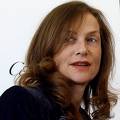 A few days after blogging about the two Isabelles (Huppert, left, and Adjani) being on the Parisian stage at the same time—but certainly not the same place—I coincidentally came across a funny article exploring the very same thing. In a Nouvel Observateur piece titled "La guerre des Isabelle" ("the Isabelles War"), Marie-Elisabeth Rouchy details the actresses' rivalry, which goes back to that Brontë sisters movie they made with André Téchiné back in 1979, when their respective agents would time their screen time to make sure one didn't get more than the other. Adjani recalls that Téchiné didn't want them to wear makeup but that they always tried to sneak some on while he wasn't looking so one wouldn't look plainer than the other. (The third sister was played by the wonderful Marie-France Pisier, but you don't see her get into feuds with anybody.)
More good stuff from the article for non-francophones:
In the late ’70s, Huppert and Adjani both wanted to star in a film adaptation of Théophile Gaultier's La dame aux camélias (usually known here as Camille). Huppert won that one, but Adjani scored a few years later when she got to do a project they both coveted, the life of Camille Claudel.
Even more deliciously (and that I had totally forgotten about), Huppert starred in Schiller's Maria Stuart in London in 1996—the character Adjani is now playing in Paris, but in Wolfgang Hildsheimer's lesser-known version of Stuart's last moments.
Rouchy also tallies the actresses' Césars (Adjani's four to Huppert's one), respective filmographies (Adjani's 27 movies to Huppert's 76) and media profiles (Adjani's breakup with Jean-Michel Jarre lands her in French celebrity magazines, Huppert gets a retrospective at MoMA and a hardcover book of portraits).
Since of course it's more exciting pick a camp, I unhesitantly join the Huppertists—though it's quite fun to watch Adjani vainly try to fight Time and in the process resemble more and more a porcelain doll.
And that's the end of tonight's Star Watch.
Subscribe to:
Posts (Atom)

 Posts
Posts


